

R2DATO Round Table
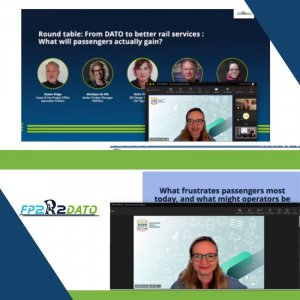
On 3 June, EPF’s Senior Researcher Delphine Grandsart participated in the closing roundtable of the R2DATO project’s final event, alongside representatives from Sporveien AS, ProRail, CAF, and the German Aerospace Center (DLR). The discussion was moderated by Daria Kuzmina, Head of UITP’s Rail Unit. EPF welcomed the opportunity to contribute the passenger perspective to the debate on the potential benefits and challenges of automated train operations, highlighting the importance of ensuring that technological innovation ultimately serves passengers’ needs and expectations.
The EU-Rail funded project R2DATO aims to use digital technology and automation to make Europe’s rail network more efficient and able to handle growing passenger and freight demand. The project is developing more advanced train control and automated train operation systems to increase network capacity without requiring major new infrastructure. Expected benefits include better punctuality, reliability and more efficient use of trains, staff and infrastructure. The project also focuses on ensuring these technologies can be deployed across Europe in a practical and cost-effective way, while addressing challenges such as public acceptance, compatibility with existing systems and regulatory issues.
The closing round table of the R2DATO final event brought together railway operators, infrastructure managers, industry, and passenger representatives to address a key question: How can Digital and Automated/ Autonomous Train Operations translate into tangible benefits for passengers and contribute to better rail services? The discussion highlighted both the potential benefits that DATO can deliver for passengers and the practical challenges that remain, including regulatory hurdles, certification requirements, and the ongoing importance of onboard human staff.
A key conclusion was that DATO should not be viewed as an objective in itself, but rather as a means of delivering the outcomes passengers value most: safe, reliable, accessible, and user-friendly rail services. When implemented effectively, automation can provide tangible benefits, including smoother operations, enhanced punctuality, increased service frequency, better incident management, and greater operational efficiency. However, these benefits can only be fully realised if passenger needs, inclusivity, and appropriate human support remain central to deployment strategies.
 Stay informed!