

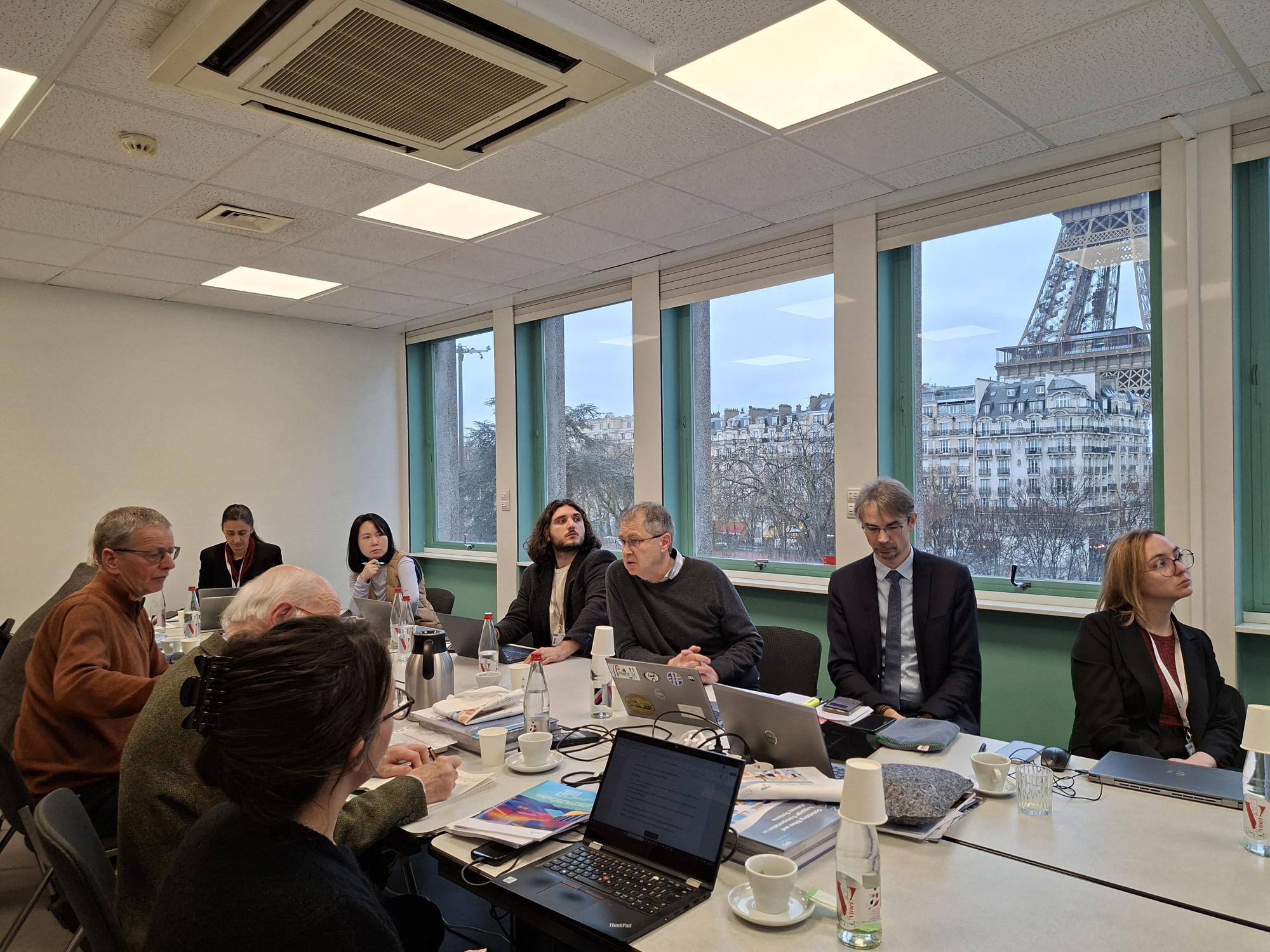
On 27 January 2026, the UIC Passenger Department hosted a technical meeting with representatives from the European Passengers’ Federation (EPF) and the French National Federation of Transport Users Associations (FNAUT). The session covered a broad range of operational topics aimed at enhancing the passenger rail experience across Europe. Participants emphasized the role of digital tools and real-time services in building trust, improving accessibility, particularly for persons with reduced mobility, and ensuring transparent communication throughout the journey.
 ➡️ Customer experience
A central theme of the discussions was the importance of improving the customer experience. UIC reiterated its commitment to placing the passenger at the core of its strategic roadmap for 2026-2028, with a focus on delivering practical value to users and measurable benefits to its members.
Within UIC, the Customer Experience Management Platform (CEMP) is developing a set of indicators to measure customer experience and satisfaction, with the aim of establishing an International Rail Standard (IRS) to harmonise approaches across the sector. EPF welcomes this work and is keen to contribute feedback on the proposed indicators and to explore potential joint monitoring initiatives.
➡️ Ticketing & Distribution
EPF and FNAUT reiterated their concerns about persistent ticketing fragmentation, which affects not only cross-border travel but also domestic journeys – for example in France, where regional authorities are developing separate ticketing systems. For EPF, passengers should have easy access to real-time, unbiased journey information and be able to easily purchase multimodal and multi-operator tickets – principles set out in EPF’s Position Paper on Multimodal Digital Mobility Services (MDMS, available here) and equally applicable to both multimodal and multi-operator rail travel.
UIC highlighted the ongoing rollout of the Open Sales and Distribution Model (OSDM), the open standard designed to enable integrated ticketing across various modes of transport, including rail, public transit, ferries, and air travel. OSDM supports one-stop-shop distribution and simplifies both cross-border and multimodal travel. OSDM forms part of a broader ‘Open Multi-Modal Toolkit’ (OMMT), which consists of five distinct components aimed at enabling seamless collaboration among service providers:
- OMMT.Plan – integrates European railway timetables via MERITS and provides multimodal location codes via TSGA’s OSDM API;
- OMMT.Book – streamlines creation and management of cross-provider offers and orders using the Open Sales and Distribution Model;
- OMMT.Move – delivers secure, digital travel rights (Flexible Content Barcode), universal ticket layout, and cryptographic key exchange for multimodal journeys;
- OMMT.Sync – ensures real-time updates on orders and journey status using eTCD (e-Ticket Control Database) and RTMDE (Real-Time Mobility Data Exchange);
- OMMT.Share – (coming soon) will manage fair revenue distribution among service providers, based on actual service usage.
These tools are already being implemented in several countries and are contributing to a more seamless and efficient travel experience across Europe.
➡️ Passenger Rights and Real-Time Data
Next topic on the agenda was passenger rights. EPF stressed the need to reinforce “through-ticketing” in the upcoming EU Rail Passenger Rights Regulation (see EPF’s input to the Call for Evidence here), noting that current rules allow operators to easily disclaim responsibility for missed connections. EPF acknowledged that voluntary sector agreements such as the CER-CIT “Agreement on Journey Continuation” (AJC) or “Hop On The Next Available Train” (HOTNAT) are positive steps, but currently remain underused and poorly communicated to passengers.
UIC collaborates with CIT and CER on the technical aspects of the “Agreement on Journey Continuation” (AJC) by providing solutions to support journey continuation. In addition, UIC facilitates the technical implementation of passenger rights via tools like the Electronic Ticket Control Database (eTCD) and real-time data exchange platforms. These rights include:
- Right to Information: Real-time updates allow passengers to receive timely and accurate information about delays, cancellations, and disruptions, helping them make informed decisions and adjust their travel plans accordingly;
- Right to Assistance: Operators can use real-time data to trigger assistance measures such as re-routing, refreshments, or accommodation, ensuring that passengers are supported during service disruptions;
- Right to Compensation: Real-time tracking provides the necessary evidence to assess eligibility for compensation and streamline claims processing, making the process more transparent and efficient for both passengers and operators.
These capabilities not only improve the passenger experience but also contribute to greater transparency, accountability, and trust in rail services.
➡️ High-Speed Rail and Night Trains
The development of high-speed rail and night train services was another key topic. These services are seen as sustainable alternatives to short-haul flights and play a vital role in promoting modal shift. UIC presented its High-Speed Atlas and Night Train Atlas as tools that support data-driven planning and help identify gaps and opportunities in the European rail network.
In turn, EPF referred to its recently adopted position paper “Connecting Europe through High-Speed Rail” (available here). In this paper, EPF calls for EU action to provide passengers with practical, cost-effective alternatives to planes and cars, increase service frequency, resolve issues like ticketing and passenger protection, coordinate timetables, internalize external costs, and make rail travel faster, more accessible, reliable, and affordable, while treating public transport as a budgetary priority.
➡️ Station Innovation and Intermodality
The transformation of railway stations into modern, accessible, and multimodal hubs was also addressed. Through initiatives such as the Station Managers Global Group (SMGG), the railway sector is advancing innovation in station design, digital services, and integration with urban mobility systems such as trams, buses, and bicycles. These efforts aim to make stations more user-friendly, sustainable, and better connected to the cities they serve.
EPF welcomed these efforts, while emphasing the continued importance of human presence and accessibility in stations. FNAUT shared examples of poor maintenance and limited services in rural stations. EPF expressed its readiness to contribute to the development of station evaluation criteria, and to explore collaboration with UIC on the revitalization of small stations.
➡️ Conclusion
The exchange between EPF, FNAUT, and UIC experts underscored the importance of coordinated operational action to improve the passenger experience – from real-time information and ticketing systems to station services and long-distance travel. The meeting reaffirmed a shared commitment to building a more seamless, inclusive, and sustainable rail system for all European travellers.
📅 Next stop: EPF will participate in the UIC Passenger Week Open Day (14 April), including a keynote on passenger expectations.
 Stay informed!